Mini relax games-No wifi
- 4.2
- Rating
- 5.00M
- Installs
- Free
- Price

 Analysis by App-foxy
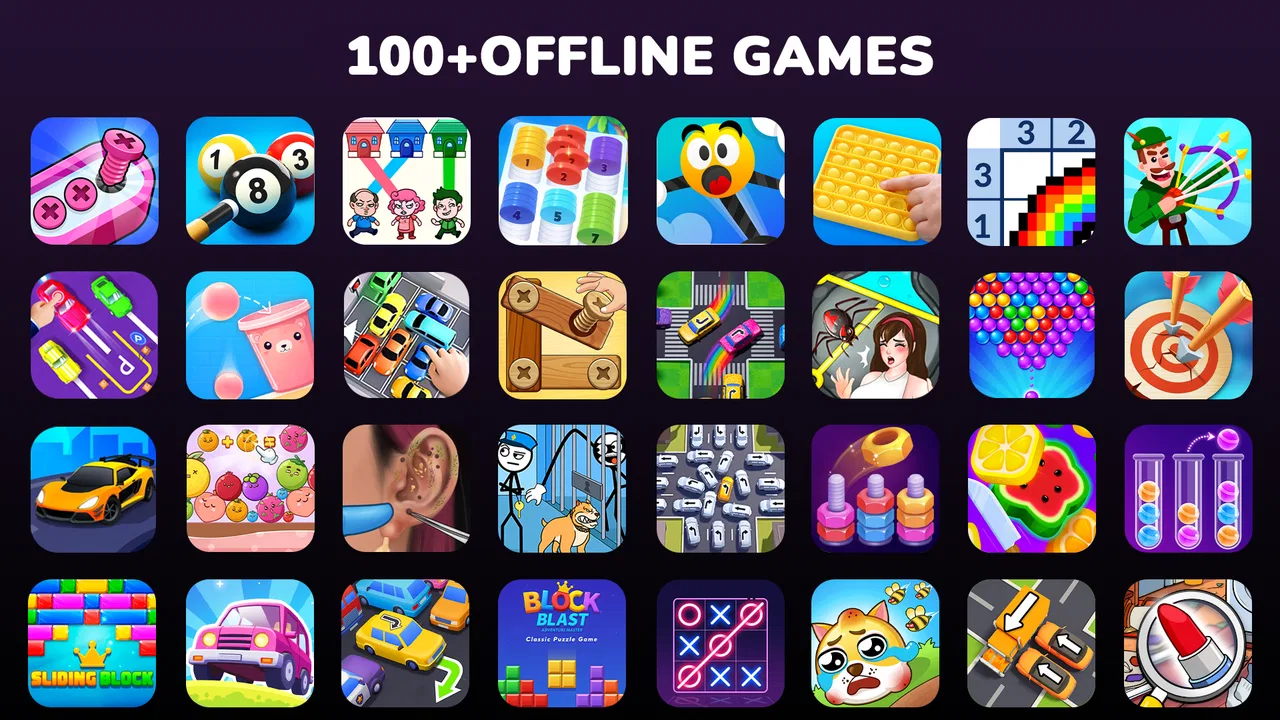
I tried Mini relax games-No wifi as the kind of casual game you open when you want a short break rather than a serious gaming session. Its appeal is easy to understand: it is presented as a collection of small relaxing games, and the offline angle makes it suitable for moments when a connection is unreliable or simply unavailable. I found the experience most useful in small pieces—during a pause, while waiting, or when I wanted something lighter than a full game.
That simplicity is also the main thing to understand before installing it. This is not the right choice if you want a deep story, competitive progression, or a single polished game with a large learning curve. It is better viewed as a compact casual playground from JMGame, designed for quick, low-pressure interaction. The game is free, rated for Everyone, and its current version is 1.1.1, so it fits households looking for something approachable on a compatible Android device.
How the first session feels and where people may get stuck
The first few minutes are important with a mini-game collection because the value comes from reaching an activity quickly. I would not approach this title expecting a long tutorial or a carefully staged campaign. The natural workflow is to open it, look through the available choices, try one, and decide whether its pace suits the moment. That makes the game approachable, but it also means the interface has to do most of the explaining.
You May Also Like

 Google Keep - Notes and lists
Google Keep’s Quiet Growth Shows the Appeal of Simpler Notes
As mobile work gets busier, Google Keep keeps winning a simple contest: capture a thought quickly, find it later, and get on with the day.

 Blood Strike: 2.5 Anniversary
Blood Strike’s Loadouts Turn Every Drop Into a Tactical Gamble
A close look at Blood Strike’s custom loadouts: how fast access to signature weapons reshapes its battle royale rhythm, rewards preparation, and narrows the gap between fights.

 Pandora - Music & Podcasts
Pandora’s Music Is Easy to Start, but Harder to Recover
Pandora’s strength is its low-effort path from a seed to a station. Its weak spot is how much confidence it asks you to place in connection, setup, and quiet recovery.

 8 Ball Pool
 Is Built on Rivalries, Rematches, and Routine
A close look at the rivalries, rematches, shared routines, and unanswered safety questions that turn a quick pool match into a persistent mobile community.

 Samsung Music
’s Quiet Strength Is Playing What You Already Own
Its reach comes less from spectacle than from dependable access to a personal library. That simplicity is both the app’s strongest retention engine and its ceiling.

 AccuWeather: Weather Radar
AccuWeather Review: A Quick, Clear Forecast for Everyday Decisions
For everyday plans, the best forecast is the one you can understand quickly. AccuWeather makes rain timing, radar, and local conditions easy to act on, with a few trade-offs.
More From Our News Desk



One common point of friction is expectation. The phrase “mini relax games” suggests variety and a calm mood, but it does not promise that every activity will feel equally relaxing. A player who prefers gentle puzzles may enjoy the slower options more than anything requiring quick reactions. Someone looking for constant novelty may instead find the individual activities too brief. I recommend giving several choices a fair try before judging the whole collection from the first one.
The offline focus is useful, but it should not be confused with a guarantee that every installation step will work without a connection. The practical distinction is simple: downloading and updating a game normally requires access to the store, while playing after installation may be possible without mobile data or Wi-Fi. I would install it before a trip or commute rather than waiting until the moment I am already offline.
Another place users can get stuck is assuming that a casual game needs no attention to device conditions. Even a small title can behave poorly when the phone is nearly full, the operating system is incompatible, or another process is interfering with the launch. Before blaming the game, I would check the basics and then retry with a clean start. That approach is faster than repeatedly tapping the icon and hoping the result changes.
What to check before deciding it is broken
Start with compatibility. The game requires Android 7.0 or later, so an older device is not a suitable test environment. If the phone meets that requirement, check available storage and leave enough room for the installation process as well as normal system operation. A device with almost no free space can produce confusing behavior, including failed installations or incomplete updates.
Next, close applications that are using a lot of memory and restart the phone. This is especially sensible if the game opens slowly, returns to the home screen, or shows a blank state. A restart does not change the game itself, but it clears temporary pressure that can make a lightweight title appear unreliable. I would also avoid testing while the phone is installing several other applications at the same time.
If the store shows an update, let that finish before opening the game. Running an older local build while an update is pending can make troubleshooting needlessly difficult. The listed version is 1.1.1, and keeping the installed copy current is the cleanest starting point for judging performance. I would not jump straight to deleting data, because that can remove local progress or settings if the game stores them on the device.
For an offline session, prepare while connected. Open the game once, allow its initial setup to finish, and try more than one activity before leaving a reliable network. This is a useful habit for any no-connection game: it separates installation problems from offline-use questions. If it works normally at home but not during a journey, the connection may be involved in startup or loading rather than in the actual play experience.
A simple recovery routine for launch and loading problems
My preferred recovery order is deliberately conservative. First, return to the home screen and open the game again. If that does not help, close it fully from the recent-apps view, then relaunch it. After that, restart the phone. These steps address temporary glitches without risking personal game information.
If the problem continues, check whether the device has enough free storage and whether Android is waiting for a system restart. I would also test the game with a stable connection once, even though the title is intended for no-Wi-Fi play. That test can reveal whether the difficulty is limited to first launch, store services, or a particular offline state. Once the game has opened successfully, I would try disconnecting and starting another session.
Clearing an app cache can sometimes help with damaged temporary files, but I would treat it as a later step rather than the first response. Clearing storage is more serious because it may reset local information. Before using that option, make sure you understand what could be lost and whether you have a way to restore it. For a small casual game, starting over may not be devastating, but it is still better to avoid unnecessary resets.
If an update has just been installed and the behavior changes, give the device a fresh restart before drawing conclusions. A version change can leave temporary processes running in the background. I would also test a different mini-game instead of repeating the same action. If only one activity causes trouble while the rest opens normally, that points to a narrower issue than a complete failure of the application.
There is a useful distinction between a crash at launch and a game that feels unresponsive after opening. A launch crash suggests compatibility, storage, or temporary system trouble. An unresponsive activity may be caused by a touch issue, an accidental gesture, or a momentary slowdown. Waiting briefly, rotating the device only if the interface supports it, and trying again after closing other apps are sensible low-risk checks.
Making the offline workflow more reliable
I found the best way to use this sort of collection is to treat it as a planned short-break tool. When I know I will be offline, I open it beforehand and identify the activities that suit the situation. For a crowded commute, I prefer something that can be paused quickly. For a quiet break, I can spend longer exploring. This small preparation removes the frustration of discovering that I do not enjoy the first option when there is no connection available to investigate anything else.
Battery level also matters in practical use. A game may be simple, but any screen-based activity consumes power, and a phone in battery-saving mode can behave differently from one running normally. If the device is already low, I would avoid treating a slower response as proof that the game is faulty. Lower screen brightness and close unnecessary applications before starting a longer session.
Touch accuracy is another overlooked factor. Mini-games often depend on tapping or dragging in a small area, so a thick screen protector, a damp display, or a case edge can make the controls feel worse than they are. I would clean the screen, hold the phone comfortably, and test a few taps in another application. If other apps also miss touches, the game is probably not the root cause.
For children, the Everyone rating makes the title easier to consider as a family-friendly casual option, but I would still try it personally first. An age rating describes suitability, not whether every activity will match a particular child’s attention span or preferences. A younger player may need help understanding the menu or switching between activities, while an older player may find the simplicity exactly what makes it appealing.
When the app is not the cause
Not every failure that appears during play comes from the game. A device with a damaged touchscreen can make tapping challenges seem inconsistent. A phone with aggressive background restrictions may close an application when the user switches away briefly. A nearly full storage drive can affect several apps at once. Checking another recently used application is a quick way to see whether the problem is broader.
Network confusion is common with offline titles. If the game works after installation but a store page, update, or first-run step does not, the issue may be the connection or the store service rather than the mini-games themselves. I would test on a dependable network, complete pending store activity, and then retry offline. This gives a clearer answer than changing several settings at once.
System updates can also alter how older applications behave. Since the minimum requirement is Android 7.0, compatibility depends not only on the number shown in the settings but also on the condition of the particular device. If the phone is very old, slowdowns may be caused by hardware limits even when the game technically installs. In that situation, a newer casual title with stronger optimization—or a simpler built-in activity—may be a better choice.
It is also worth considering personal fit. If the game feels repetitive after a short session, that is not necessarily a technical defect. A collection of small activities is designed around variety in short bursts, not endless depth in one mode. Players who want achievements, a detailed progression system, multiplayer competition, or a substantial narrative should look toward a dedicated puzzle or arcade game instead.
Where it fits among casual alternatives
Compared with a single puzzle game, this collection has a practical advantage: I can change the type of activity without installing another title. That makes it convenient for people whose mood changes from one break to the next. The trade-off is that a collection may not offer the same refinement or depth as a game built around one central mechanic.
Compared with online casual games, the no-Wi-Fi positioning is the clearest reason to choose it. There is less dependence on a signal during a commute, in a waiting room, or while traveling. Online alternatives may provide leaderboards, live events, social play, or a steady stream of new content, but they also bring connection requirements and more interruptions. I would choose this game when reliability and quiet use matter more than community features.
Compared with large arcade packages, the likely benefit is a lighter commitment. You can open it without preparing for a long session, and the casual structure suits people who do not want to memorize complex controls. The limitation is equally clear: if you want a highly polished flagship experience, a specialized game may feel more satisfying. The decision comes down to breadth in small portions versus depth in one carefully developed format.
The audience numbers suggest that the concept has reached a substantial Android audience: it has passed one million installs and holds an average of 4.0 from around 2.7 thousand ratings. I read that as a sign of reasonable interest rather than proof that it will suit everyone. The smaller review count, at roughly forty-one written reviews, gives less detailed public discussion to rely on, so personal testing remains important.
Who should install it—and who should skip it
I would recommend it to someone who wants a free, uncomplicated way to fill short gaps without depending on Wi-Fi. It is particularly suitable for users who enjoy trying several small activities, prefer low-pressure play, and do not need a long-term progression system. It can also work well as a backup game on a secondary device used for travel or waiting periods.
I would be more cautious if you need a game that saves a detailed campaign, supports serious competition, or remains engaging for long uninterrupted sessions. I would also skip it if your phone is below Android 7.0, has very little free storage, or already struggles with basic applications. In those cases, installation and stability may become more frustrating than the relaxed experience is worth.
My most practical recommendation is to test it in three situations: connected at home, offline for a few minutes, and after switching away and returning. That small routine checks the parts that matter in real life—startup, offline access, and recovery from interruption. If those moments feel smooth and at least a few activities appeal to you, the game has done its job.
After using it as a short-break title, I see Mini relax games-No wifi as a useful casual option rather than a must-have for every player. JMGame keeps the idea straightforward: quick entertainment, a relaxed tone, and the convenience of playing away from a network. The main limitation is that simplicity can become repetition for anyone seeking depth.
My final view is positive for the right use case: install it when you want a free, accessible collection for brief offline sessions, but choose a dedicated puzzle, arcade, or online game when you need richer progression or more demanding play. Its value is not in replacing every other game; it is in being easy to reach when you have a few spare minutes and do not want your entertainment to depend on a signal.
FAQs for Mini relax games-No wifi
01What is Mini Relax Games-No Wifi?
Mini Relax Games-No Wifi is a collection of simple, casual games designed to help you unwind without the need for an internet connection. Ideal for quick breaks, the app offers a variety of games that can be played offline, making it perfect for travel or areas with weak Wi-Fi signals.
02Do I need an internet connection to play Mini Relax Games-No Wifi?
No, you do not need an internet connection to play Mini Relax Games-No Wifi. All games within the app can be enjoyed offline, ensuring you can play anytime and anywhere without worrying about connectivity issues or data usage.
03What type of games are included in Mini Relax Games-No Wifi?
The app includes a diverse selection of casual games, ranging from puzzles and brain teasers to arcade-style challenges. Each game is designed to be easy to pick up and play, providing a quick escape from daily stress in short, engaging sessions.
04Is Mini Relax Games-No Wifi free to download and use?
Yes, Mini Relax Games-No Wifi is free to download. While the app offers a range of games at no cost, there may be optional in-app purchases available to enhance your gaming experience or unlock additional content.
05Are there any ads in Mini Relax Games-No Wifi?
Yes, the app includes ads to support its free availability. However, these ads are typically non-intrusive and do not significantly disrupt gameplay. There may also be an option to remove ads through an in-app purchase for a smoother experience.
Pros
- Simple and intuitive interface.
- Wide variety of mini games.
- No internet connection required.
- Minimal storage space needed.
- Regular updates with new games.
Cons
- Ads can be frequent and intrusive.
- Limited customization options.
- Some games can be repetitive.
- Occasional lag on older devices.
- No multiplayer or social features.

Mini relax games-No wifi
Gallery